 Henricus A. M. Mutsaers, Michael Schou Jensen
Department of Clinical Medicine, Aarhus University, Aarhus, Denmark
Grant:
Forsøgsdyrenes Værn
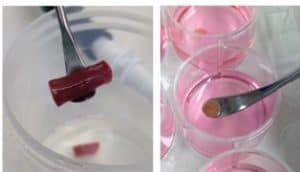
2019 In this project we set out to establish and display a completely animal‐free drug screening platform for renal fibrosis based on human precision‐cut kidney slices (PCKS) and nonanimal ‐ derived reagents. PCKS is a unique model that is more physiologically relevant as compared to most of the currently used in vitro systems. Each slice contains all cell types and acellular components of the whole organ in the original configuration, while preserving the intercellular and cell‐matrix interactions. In other words, PCKS are miniaturized organs that retain native tissue architecture and intact cellular environment.
To induce fibrosis, we exposed human PCKS to the archetypical pro‐fibrotic growth factor TGF‐β. The slices were then treated with three different compounds with known antifibrotic
activity, namely butaprost, SC‐19220 and tamoxifen. Subsequently, we studied
changes in gene expression using Human Fibrosis RT2 Profiler PCR Arrays, which allowed us to profile 84 fibrosis‐related genes simultaneously. Our results demonstrated that all three tested compounds reduced fibrosis and, due to the use of gene arrays, we could show the distinct molecular mechanism of action of each compound. This information is extremely valuable during drug development. The anti‐fibrotic activity of butaprost was also confirmed
on a protein level using non‐animal generated antibodies. Similar experiments are currently being performed with SC‐19220 and tamoxifen.
All in all, we believe that we successfully demonstrated that it is feasible to use a completely animal‐free approach to test drug efficacy and elucidate mechanisms of action. In addition, we are currently preparing a manuscript for BMC Research Notes entitled “An animal‐free preclinical drug screening platform based on human precision‐cut kidney slices”, which will be submitted as soon as the final Western blot experiments are performed. The draft of the manuscript can be found below, including all the figures.
Moreover, Rick was recently appointed as Assistant Professor at the Department of Clinical Medicine AU, in part because we were rewarded this grant by Forsøgsdyrenes Værn, and he will continue to actively promote alternatives, such as PCKS, and implement the 3Rs in his research.

 Scan koden med din mobiltelefon