Forsøgsdyr er glemte dyr – det arbejder vi på at ændre
The Spread of Antibody Libraries
Dr Alison Gray, Nottingham University
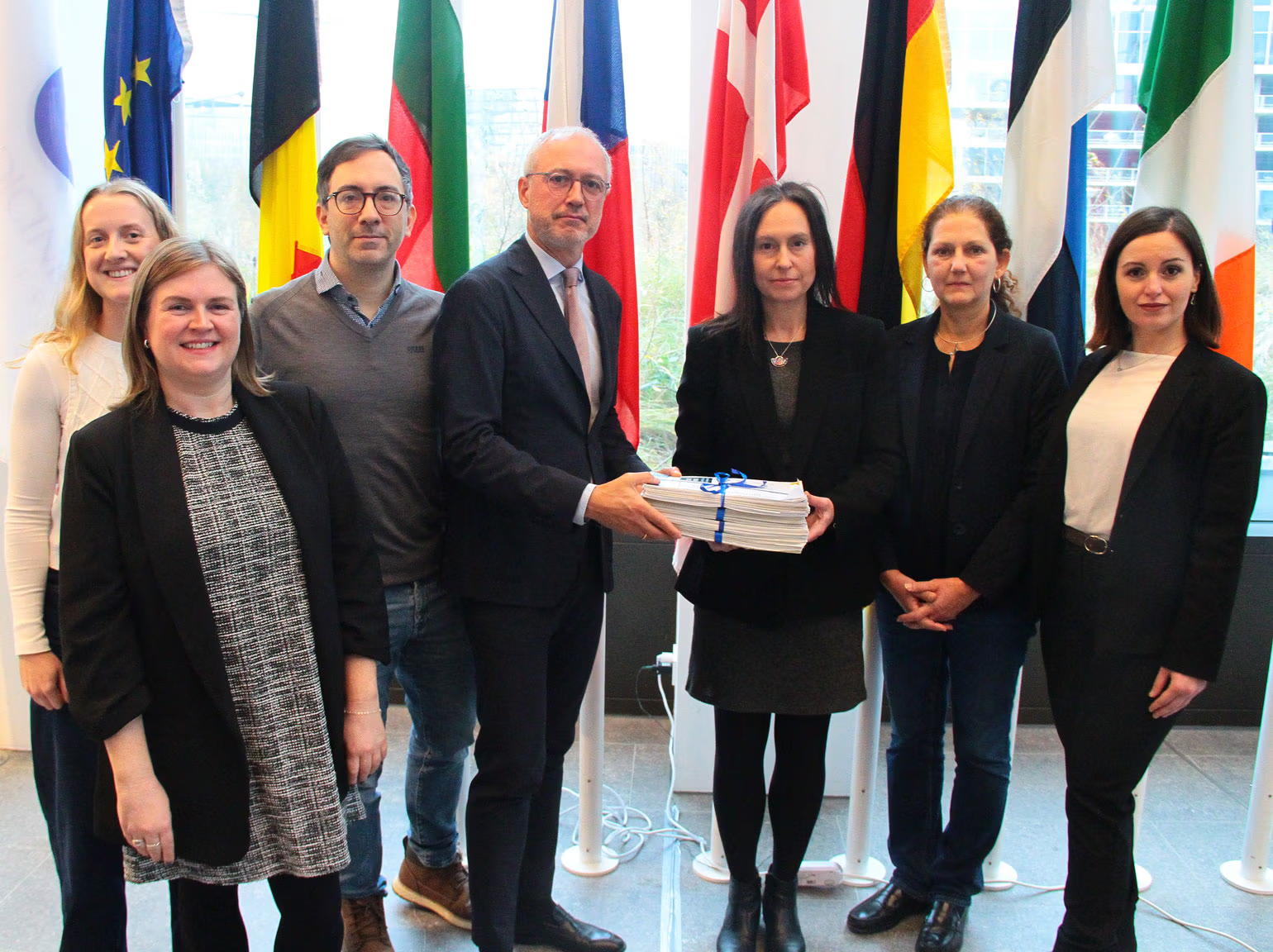
In 2018, Forsøgsdyrenes Værn and Alternativfondet began to support the AFABILITY project. The aim was to develop libraries of antibodies generated without the use of animals. With our support, the founder of AFABILITY, Dr. Alison Gray, and her team at the University of Nottingham in England have now developed two antibody libraries.
The libraries contain many billions of antibody fragments and now they must be tested and shared. Forsøgsdyrenes Værn and Alternativfondet have therefore decided to jointly finance the continuation of the project in the hope that more and more researchers will use the libraries and go over to generation of antibodies without the use of animals.
The libraries are now being thoroughly tested to ensure that they possess the desired qualities, including high diversity, stability and the ability to bind to targets. The libraries have been and will be delivered to a growing number of research groups, research institutions and commercial firms, where they are tested, so that experiences with using them can be gathered. It is important that the libraries are so-called ‘open access’ – that is, that they are free and can be accessed without hindrance by those who work with antibodies. That means that the libraries are donated to laboratories without contractual limitations such as intellectual property rights, obligations to pay royalties or limitations on use.
The phage-display-based technology is at the moment surrounded by mythmaking. Many researchers do not believe that the technology can replace animals and therefore choose to hold to that with which they have experience: producing antibodies in animals. An important focus in the coming years will therefore be that the technique and its availability and possibilities become more widely known. That will be achieved by:
Fostering research cooperation with independent research groups in order to promote the use of animal-friendly reagents, called AFAs.
Developing fully understandable online or face-to-face training programmes.
Making educational opportunities available to researchers, who normally do not have access to the technology.
Developing and delivering expertise to improve the success rate for AFA-based projects.
Se denne interessante video fra en kroatisk dyreværnsforening. Forbipasserende på gaden i Zagreb indgik i et eksperiment: er nogle dyr mere værd end andre?
Resistente bakterier er blevet en større trussel langt hurtigere, end eksperterne hidtil har forudset det. Studier peger på, at resistente bakterier i 2050 vil tage livet af lige så mange mennesker som for eksempel kræftsygdomme. Den seneste sag fra Rigshospitalet, hvor 68 kritisk syge spædbørn blev smittet med MRSA-bakterien, mens de var indlagt, understreger aktualiteten af denne bog skrevet afprofessor Hans Jørn Kolmos. Læs mere…
Er det også hvad du véd om forsøg på dyr? Få ny viden ved at indmelde dig i Forsøgsdyrenes Værn Ja, jeg vil gerne være medlem …

 Dr Alison Gray, Nottingham University
 Fostering research cooperation with independent research groups in order to promote the use of animal-friendly reagents, called AFAs.

 Scan koden med din mobiltelefon